By Lynn McMorris
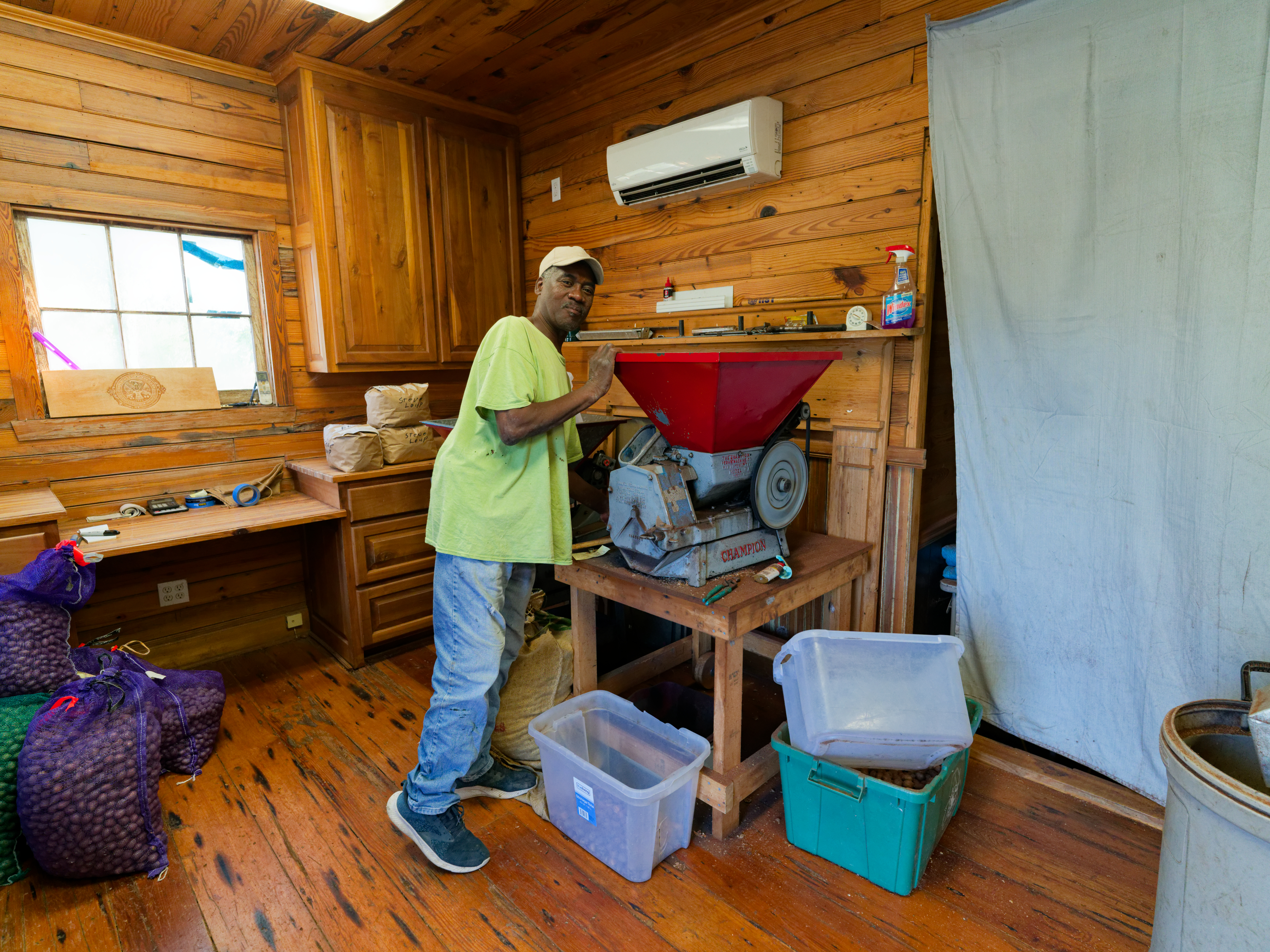
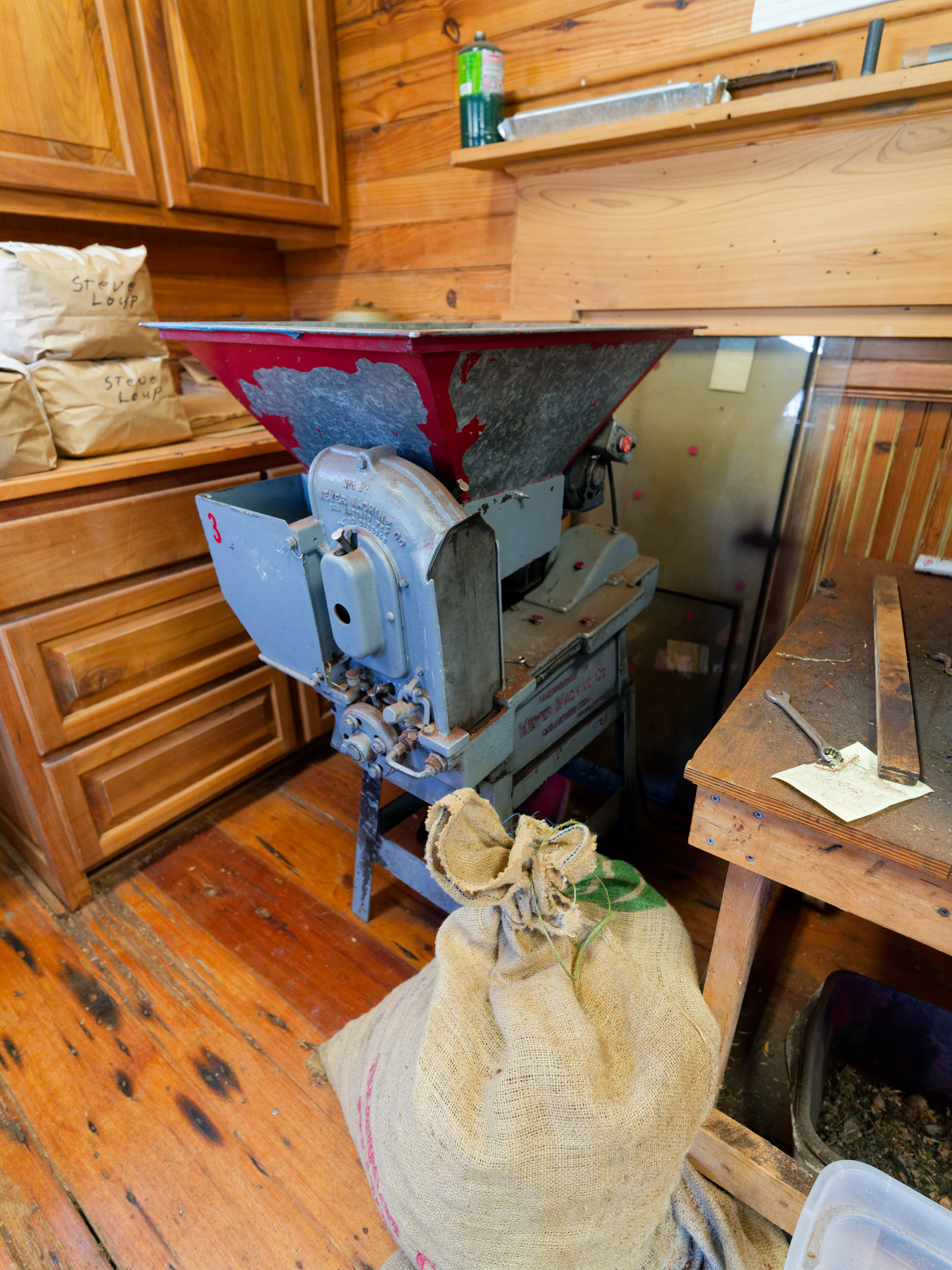
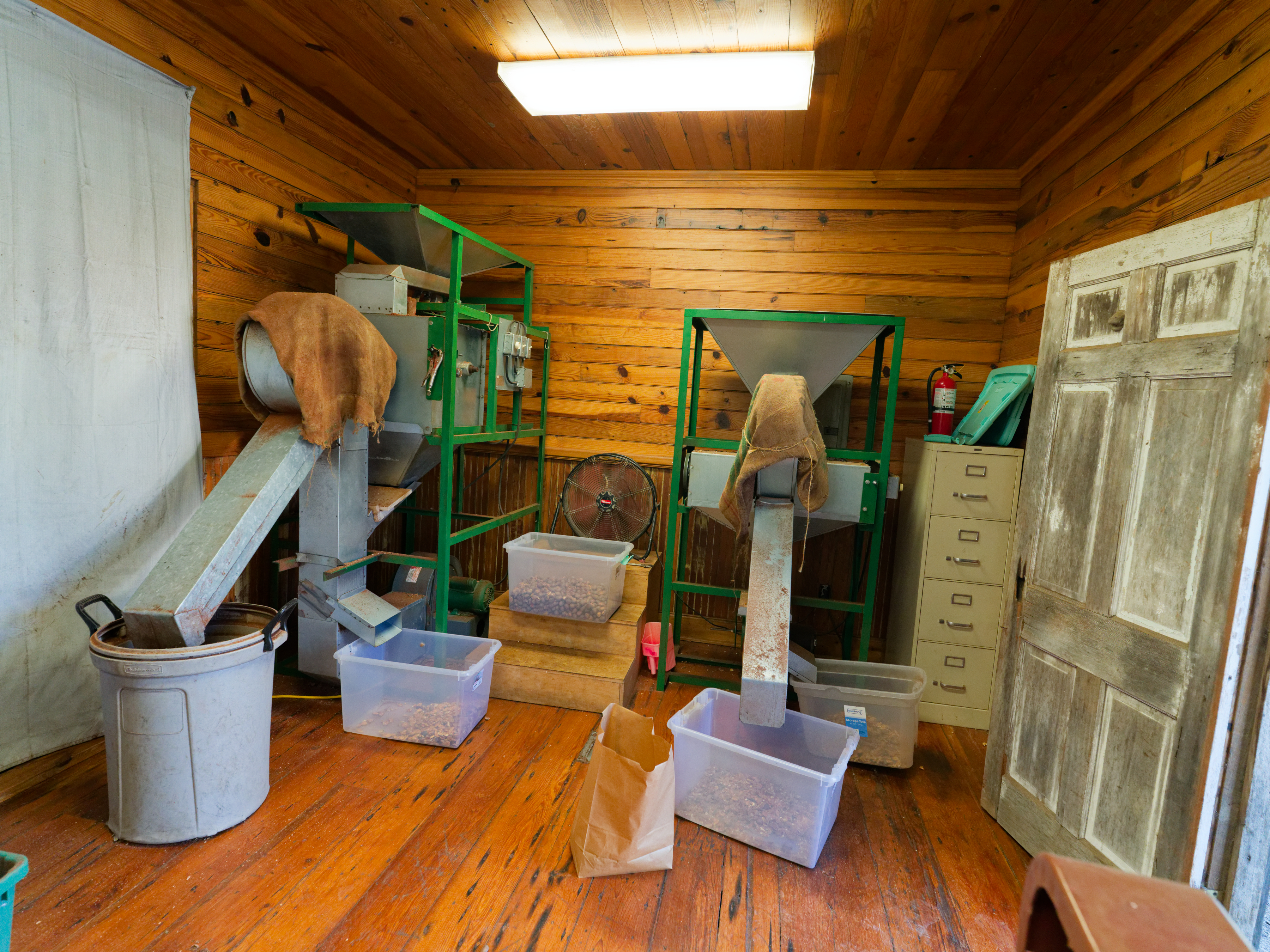
If you wanted to know how to crack a tough nut back in 1937, all you had to do was ask Leo J. Meyer of San Antonio, Texas. On the last day of that year, he filed a patent for a nut-cracking machine on behalf of his employer, The Champion Pecan Machine Company. After the Meyer Machine Company was founded in 1945, he patented a new cracker in his own name. Machines from both companies are still at work today, including a pair in Morganza, where I watched a Champion that is nearly 70 years old work through a sack of pecans.
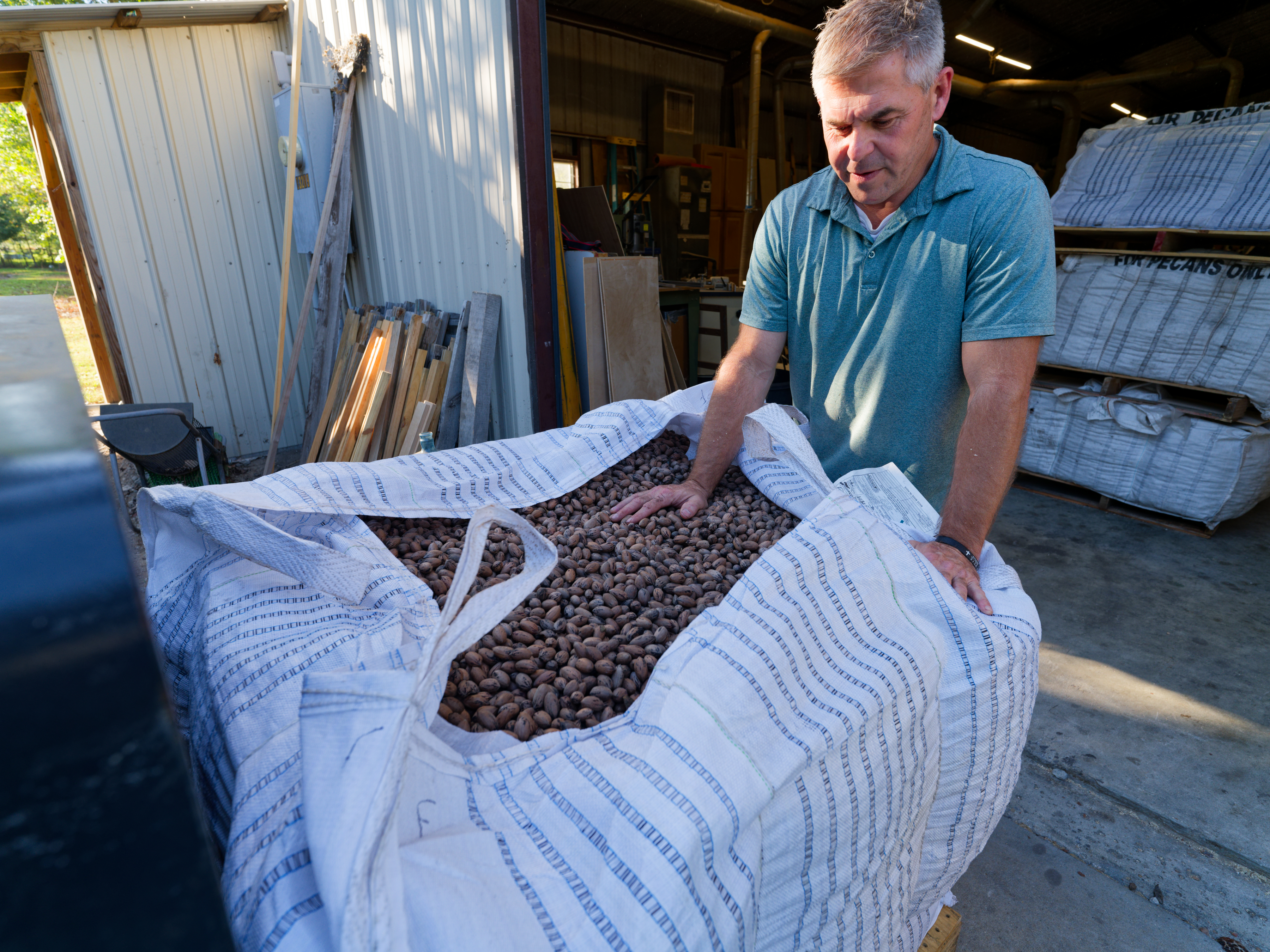
The machines belong to Brandon Bergeron, who has cracked and shelled pecans for his neighbors since 2011. His operations has no website and no official name. “I just do everything on my name” he said. Still, about 7,000 lbs of pecans pass through it each season, with customers coming from Zachary, St. Francisville, and Pointe Coupee Parish. All without advertising beyond an occasional roadside sign. It has all been word of mouth.
Bergeron learned the work at Farmer’s Feed Mill in New Roads, where he cracked pecans from 1996-2006 on the same make and model cracker he uses today. The store sat across from the water towner, on what was once the main route to the ferry. When the bridge opened, traffic moved elsewhere and the feed mill closed.
Rudy Burke, longtime Morganza barber, sparked the idea of his own operation. “He said, ‘Brandon, why don’t you buy a cracker and a sheller? We don’t have anywhere to go in Morganza’” Bergeron recalled. “So I took him up on it.”
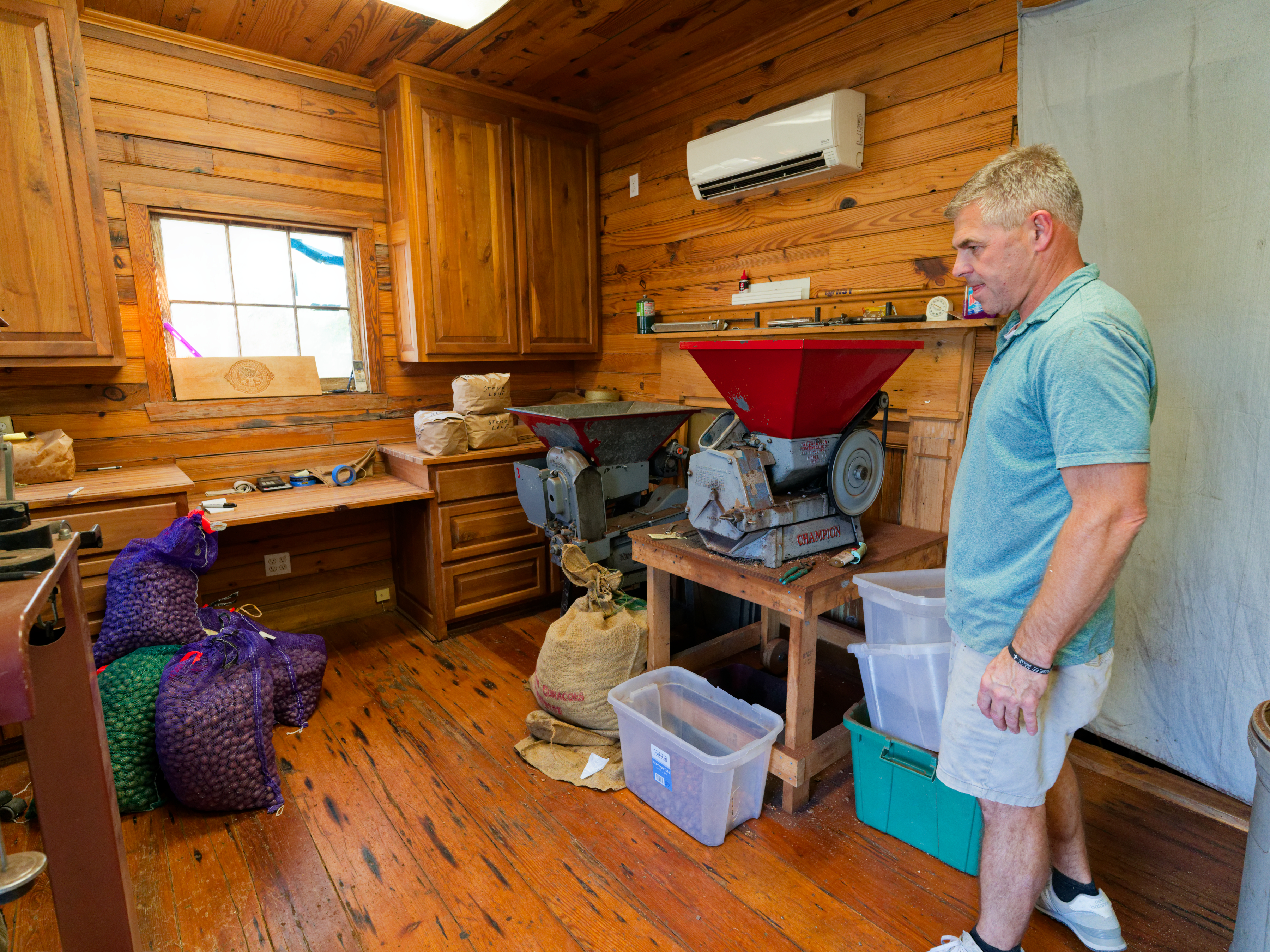
He already had a home business. Bergeron started Morganza Cabinetry and Millworks in 2008, and in 2011 he added a small building beside that shop to house his crackers.
Bergeron owns both a Champion and a Meyer, but he relies on the older Champion. The reason is the type of pecan most of his customers bring in.
About 90% of what he cracks is improved varieties, and nearly all of those are Elliott’s, prized for its flavor but encased in a hard shell. Georgia and Texas growers can raise true paper shell pecans, whose thin shells crack easily. Pointe Coupee’s Elliotts put up more of a fight.
Modern commercial crackers can run 600 or more cracks a minute. Bergeron’s Champion makes about 60. That slower pace gives each nut time to settle into the cracking pocket before the dies close on it.
“It can kind of roll in here, seat itself, where it gets a direct hit, and it just does a much better job,” he said. A nut that sits crooked in a faster machine comes out split or untracked. For homeowners who have to pick out their own pecans, that difference matters.
Large shelling plants solve the problem with money. They run nuts over screens that sort them into sizes from 11 up to 22, then feed each size to its own cracker fitted with matching pockets. An Elliott runs about a size 16. “I don’t have the luxury of having a million dollar facility.” Bergeron said.
What he has instead is a machine he can keep running himself. I’m no mechanic by any means but I can take it part and clean it, maintain, and keep it operational,” he said. He admires the old design for what it accomplishes without modern technology. “Maybe it’s not as fast and efficient as today’s stuff, but it actually does a better job than many of the new ones,” he said.
The process is simple. Customers drop off their pecans. Bergeron weighs them and the orders are handled first come, first served. When the batch is done, he calls or texts with the total and customers pick up when it suits them. He charges $.55 a pound of crack and shell or $.30 a pound of crack only. Clyde Paige works alongside him at the machines
Cracking also brings business to his other pecan venture since 2021. Bergeron has run a buying station for the Bagley family, third-generation pecan buyers, whose business dates back about a century. ”I’ll buy your pecans. I’ll crack and shell them,” he said. A customer with nuts to sell and nuts to keep can handle both in one stop.
He has no relation to the other Bergerons in the pecan business. He once counted about nine Bergeron families in Pointe Coupee, and he jokes that half of them share an interest in pecans. “Somewhere in our DNA pool” he said.
The season brought plenty of pecans but a tougher job. “Production is excellent,” Bergeron said. But the drought left shells extra hard. Cracking a full hard nut takes just the right pressure, and sometimes the tip breaks. He estimates yield is off by about 5% from normal.
Bergeron estimates about 75% of his customers are elderly. For them, a sack of crack pecans means holiday baking with nuts from their own trees.
“You raise them in your yard. You’ve watched your tree. You’ve fertilized it. You’ve watered it,” he said. You can pick them, bring them to someone like myself, and they can process it, and you have your own nuts”
Asked what the parish would lose without small shops like his,” he said “The convenience of a local service that keeps family traditions going.”
His own favorite way to use them is simple. Lightly toasted pecans in a skillet with a little butter, stir them into melted almond bark and spoon them out to set.”
The Pawnee is his favorite eating pecan, though it doesn’t do well in Louisiana. The Elliott comes in second, and the Caddo is third.


Leave a Reply